
The Part of the Food System Nobody Talks About

A visit to Zhana Solutions, Bogotá
September, 2026
By: Michelle Arevalo-Carpenter
Every restaurant meal has a visible life and an invisible one.
The visible life ends when the plate is cleared. The invisible one continues in the kitchen long after the last customer leaves: in the water used to clean the pans, in the oils and fats that coat the drainage pipes, in the accumulated grease that, if handled poorly, will find its way into the city's arteries. Into the drainage network. Into the rivers. Into the water that someone downstream will eventually drink.
I went to Bogotá recently and visited Zhana Solutions, one of IMPAQTO Capital's portfolio companies. We visited their office, their team, and two of their clients. I came back with something I wasn't entirely expecting: a much clearer picture of where the food system actually breaks.
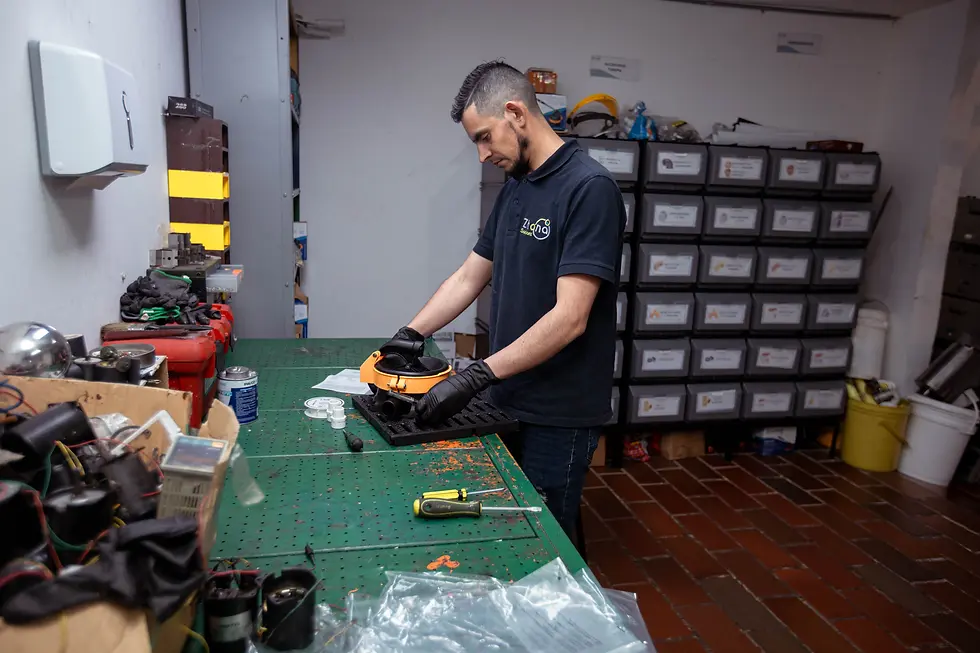
Where the system leaks
We tend to think about food systems in terms of what's produced, transported, and consumed. Sustainable agriculture. Supply chains. Food waste reduction. These are the conversations we know how to have.
But there's a piece that gets almost no attention: what happens to the byproducts of cooking at scale. Specifically, the fats and oils that every commercial kitchen generates every single day.
In cities across Latin America, restaurants deal with this problem in one of two ways. The informal way, which is to let grease accumulate in the drainage and hope regulators don't notice, or to dump it wherever is convenient. Or the expensive way: hire a company to periodically vacuum out a clogged grease trap, a process that is dirty, disruptive, and often irregular enough that the problem just moves slowly downstream.
Neither solution closes the loop. Both routes, eventually, lead to the same place: urban waterways absorbing cooking grease that the food system never figured out what to do with.

The company that was born at a river
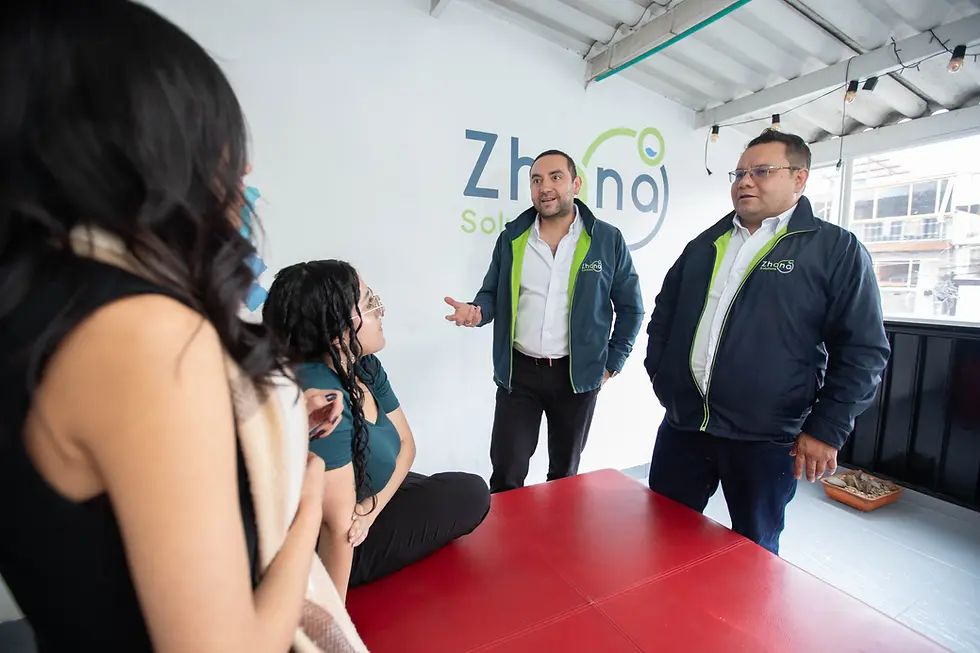
Zhana Solutions was founded by three people who collectively bring finance, environmental engineering, and a near-spiritual commitment to water.
Javier, the technical co-founder, spent his last semester of university backpacking through Colombia. In the Sierra Nevada, he encountered an indigenous community called the Sahar, who had organized their entire social and spiritual life around protecting the water. Something clicked. He came back with an obsession that eventually led him to a patent in advanced electrochemical water treatment.
Francisco, the business co-founder, spent nine years at the Banco de la República before leaving to become an entrepreneur. He had also owned a restaurant and had lived, firsthand, the absurdity of the grease trap problem. When Javier explained the technology at a birthday asado, Francisco didn't just see a product. He saw the market gap.
Andrés, the third co-founder, came in later, as an investor who fell so in love with the mission that he left a career in cybersecurity to join full time. He describes it as a spiritual mandate. The three of them call themselves the elements: Javier is water, Andrés is fire, Francisco is earth.

What 400 kitchens look like from the outside
Today, Zhana's patented electrochemical systems are installed in more than 400 commercial kitchens across Colombia, removing up to 99% of fats and oils from wastewater at the source. Their clients include neighborhood restaurants, national fast-food chains, and now, through a carefully managed pilot, Arcos Dorados in Mexico.
The model is elegant: Zhana installs the machine, provides maintenance, training, and ongoing support, and charges a monthly service fee. The client never has to buy the equipment. The client never has to manage a grease trap again. And the water leaving that kitchen is fundamentally cleaner than it was before.
At individual scale, this is a compliance solution. At the scale of hundreds of kitchens, it becomes something different: an intervention in the urban water cycle.

The neighbor who became a client
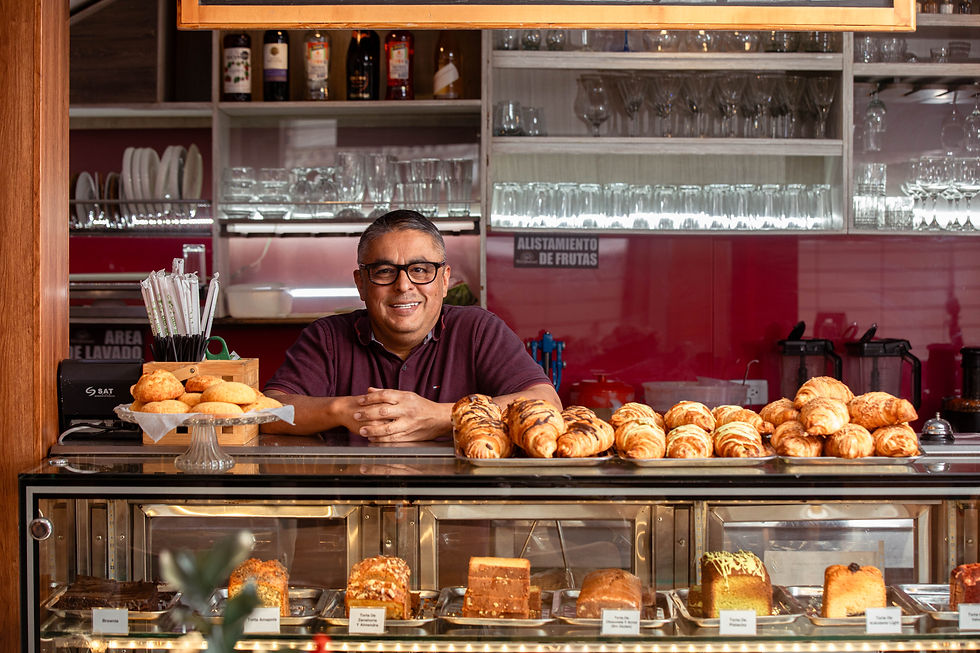
One of the visits I made in Bogotá was to Villa Gourmet, a small restaurant that has been operating in the same neighborhood for ten years. They started as a bakery and grew into a full kitchen by listening to what their neighbors wanted. Their panadero has been with them for nine of those ten years. Their pastry chef started as a waitress.
The owner told me how he found out about Zhana: a chance meeting at a Cámara de Comercio event about food handling regulations. A Zhana commercial rep approached him in the parking lot on his way out to lunch. He ignored him for two weeks, then called back.
What struck me was how he talked about the decision. Not as a regulatory burden or a compliance checkbox. As a question of being a good neighbor. "We don't want to contaminate. We don't want our neighbors to contaminate." He lives near the restaurant. His children play in these streets.
The dignity in the details
There is one piece of the Zhana story that doesn't make it into the environmental pitch but that I think matters just as much.
Before Zhana, cleaning a grease trap in a commercial kitchen was one of the worst jobs in the building. Accumulated fats and oils, the smell, the masks and gloves, the bags. The smell. It was always assigned to the lowest-paid person in the kitchen: the Stewart, the kitchen auxiliary. And because it was so unpleasant, it was also the task most likely to be skipped, delayed, or done halfway.
The owner of Villa Gourmet put it plainly. He said the conflict over who had to clean the trap was a recurring source of tension in his team. People would let it go longer than they should. The second week was always worse than the first.
Zhana changed that dynamic completely. The machine captures grease continuously as it flows through the drainage system. What the kitchen worker now has to do is remove a basket, empty it with water, and replace it. That is the entire task. It is clean, quick, and carries no social stigma. The right thing to do is now also the easy thing to do.
This matters beyond the workplace. When proper grease disposal is a pleasant task, it gets done consistently. When it is a miserable one, it gets cut short, and the shortcut eventually finds its way into the drain. Zhana's technology doesn't just capture grease: it removes the incentive to do the wrong thing.
Closing the loop
The grease that a Zhana system captures doesn't disappear. It comes out of the kitchen clean, contained, and ready to be processed by certified companies into biodiesel or soap, turning what was once waste into an input for another part of the economy.
This is what makes Zhana's approach fundamentally different from what came before. In the old system, accumulated grease was so unpleasant to handle that proper disposal required real effort and real willingness to comply. The path of least resistance was always to cut corners. In Zhana's system, the grease is already separated, already contained, already clean. The path of least resistance is compliance.
At the scale Zhana is now operating, this shift in incentives is not just good for individual kitchens. It is meaningful infrastructure for the urban food system. Hundreds of kitchens, handling their waste correctly not because someone is watching, but because the technology made it the obvious choice. That is how systemic change actually happens: not through enforcement alone, but through design that makes the right behavior the default one.

Why capital design matters here
IMPAQTO Capital invested in Zhana Solutions through revenue-based financing: capital that grows and shrinks with the company's actual cash flow, with no collateral requirement, no equity dilution, and no pressure to grow faster than the business can handle responsibly.
Zhana's model is inherently cyclical. They install machines, collect monthly fees, and reinvest. Revenue-based financing fits that rhythm in a way that traditional bank credit, with its fixed amortization schedules and its asset-backed requirements, never could. The company can focus on building the right client relationships, deepening its impact, and expanding into Mexico at the pace that makes sense.
The food system doesn't need more unicorns. It needs more Zhanas: companies that understand one specific failure point in the system, build a durable solution for it, and grow steadily enough to matter. That is exactly the kind of company we exist to back.
---
IMPAQTO Capital is an Andean-focused impact fund providing flexible, non-dilutive capital to SMEs generating measurable environmental and social impact. We are currently fundraising for Fund II.